How Outlane Businesses Store Smarter—And Why You Should Too
Find Out More →Walk past any of the farms or agricultural operations scattered across our valley, and you'll notice something: they don't just throw everything into a barn and hope for the best. The businesses around Outlane that actually make self storage work treat it like a system—inventory management, seasonal rotation, clear labelling. Most homeowners? They rent a unit, fill it, forget what's in there, and wonder why they're paying for space they barely use. There's a real gap between how local business owners think about storage and how the rest of us do it. And it's worth closing.
Why Outlane Businesses Treat Storage Like Real Estate
Local businesses here approach self storage the way they'd approach any other operational cost: they know exactly what's going in, why it's going in, and when it's coming out. It's not sentimental. It's not 'just in case.' It's deliberate.
A farming business storing seasonal equipment off-site doesn't pay for more space than it needs because that's wasted money. They don't let a unit sit half-empty for months because that directly cuts into margins. They track what's stored, rotate stock efficiently, and pull things when they actually need them. Some businesses even use their storage unit as overflow during busy seasons—then clear it out when trade slows. That's completely different from a household approach, where storage often becomes a permanent parking lot for things we're not sure about.
What they've figured out is simple: self storage is a tool, not a solution. You use it strategically, or you waste money on it.
The Inventory System That Actually Works
Most people rent a unit, load it up, and that's the last time they think about it. Businesses in Outlane don't do that. They keep a basic record of what's stored where.
Nothing fancy. Often it's just a notebook or a note on their phone—what's inside, which shelf or corner, when it went in, when it's due to come out. This sounds boring, but it's the difference between paying for storage you use and paying for storage you forget about entirely. You'd be amazed how many people rent a unit because they think they might need something 'someday,' then never retrieve it.
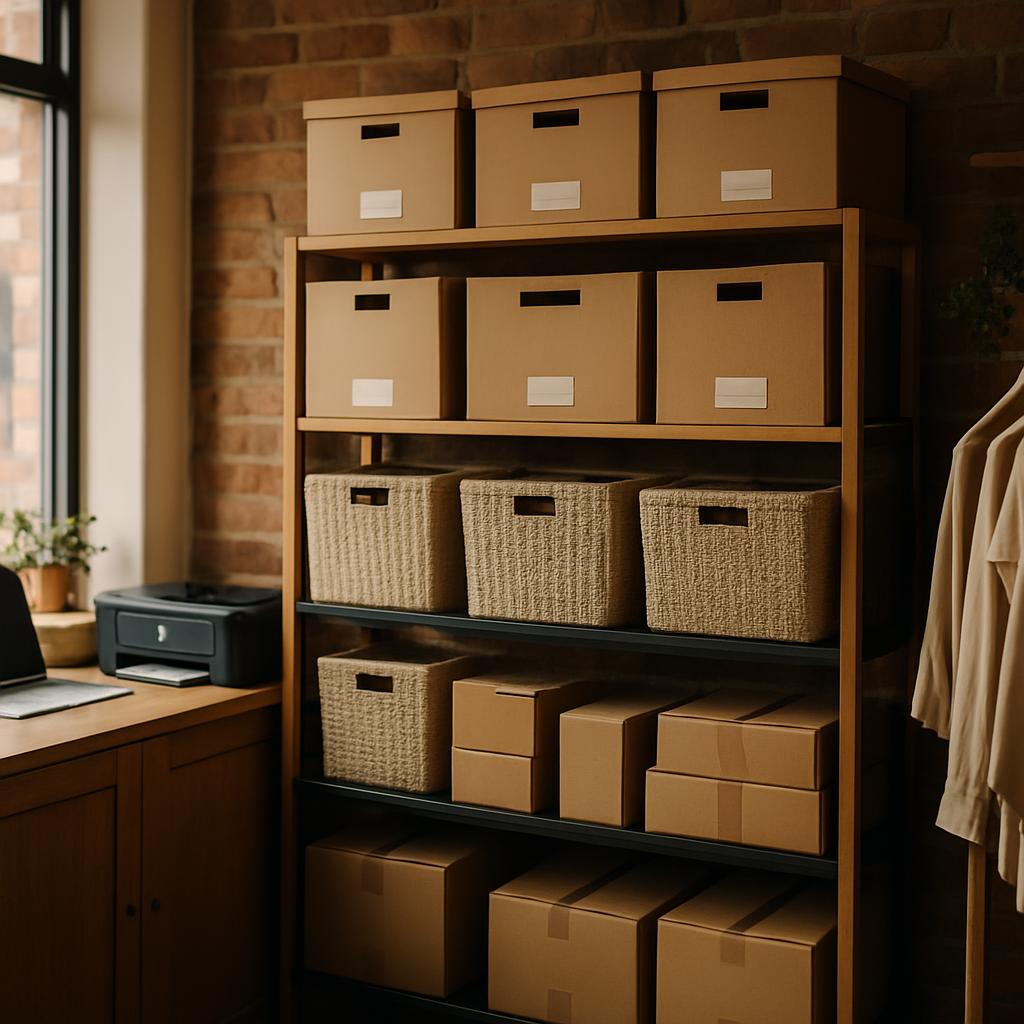
The practical takeaway here is straightforward: before you rent a unit, list what's actually going in. Be specific—not 'gardening stuff,' but 'two garden tables, a pressure washer, and winter planters.' Then label your boxes or items clearly and keep a photo or quick note on your phone. It takes fifteen minutes and saves you from renting space for things you've genuinely forgotten about. Once you understand the real costs involved, you'll see why this matters more than you'd think.
Seasonal Rotation: When Storage Actually Pays for Itself
Here's where businesses really pull ahead. They use self storage seasonally. Ski equipment comes out in winter, goes back in spring. Stock from a quieter season gets stored, then retrieved during busier months. The unit is active, not permanent.
Households can do the same thing, but most don't think of it that way. You've got Christmas decorations, garden furniture, kids' outgrown toys, seasonal clothing. Instead of letting all of it clutter your home year-round, or stuffing your loft and garage until you can't move, you can rotate it. Christmas stuff goes into self storage in January and comes back out in October. Garden furniture gets stored over winter. Off-season clothing takes up a unit for three months, then comes home.
The math shifts when you think about it like this. You're not paying for permanent storage; you're paying for temporary space during the months you don't need something. That's a very different proposition, and it's genuinely cost-effective—especially if you've got a smaller home and limited space already.
The Real Difference: Discipline
The honest difference between how local businesses use self storage and how most homeowners do comes down to one thing: they don't rent space they don't actually need. They don't keep things 'just in case.' They don't rent a bigger unit than necessary to make future decisions easier. They ask themselves hard questions before signing up.
Do I need this? When will I actually use it? Is storage cheaper than replacing it if I got rid of it now? How long am I keeping it? Those sound like simple questions, but they're the ones that separate people who get value from self storage and people who just throw money at a unit they barely use.
You don't have to run a business to think like one. You can bring the same discipline to your own storage decisions. Be honest about whether you're storing things because you genuinely need them in the future, or because you can't quite decide to let them go. The first is a sensible use of self storage. The second is expensive clutter relocation.
If you're ready to use self storage the right way—as a real tool, not a default—have a think about what actually needs to go in, label it clearly, and set a mental note for when it comes back out. And if you're unsure about the cost side of renting locally, that's worth sorting out first. Then give Self Storage Outlane a call. They can help you find a unit that actually matches what you need, not what you think you might need someday.
Looking for Self Storage near Outlane?
We have secure, flexible units available in the area. Get in touch with Self Storage Outlane today.
Find Out More →